Saffron Crocus
Crocus sativus
Family: Iridaceae · Also called Autumn Crocus (saffron), Kesar, Za'faran
Earthy & Warm · Autumn bloomer
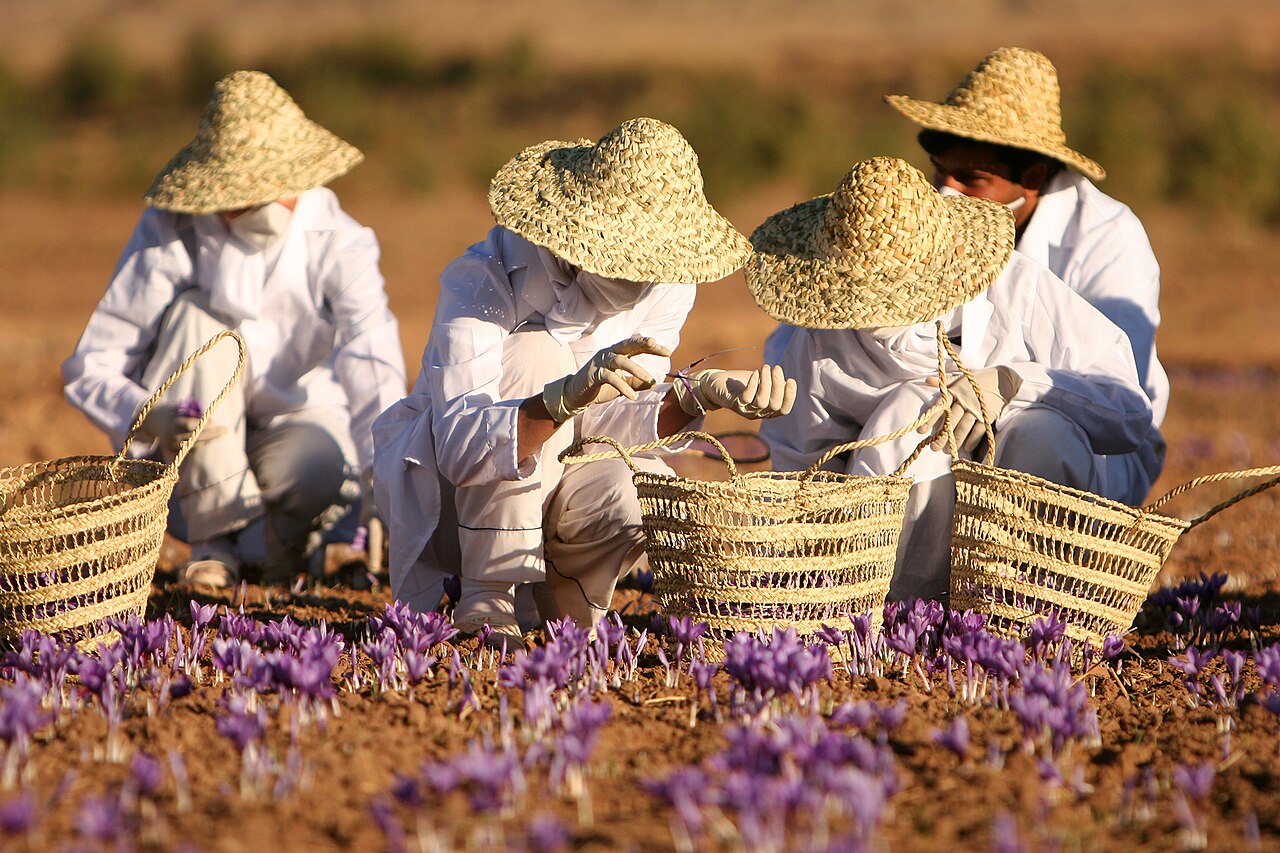
The saffron crocus is the source of the world's most precious spice. Each lilac-purple flower produces just three crimson stigmas, the saffron threads. It takes 150,000 flowers, hand-picked at dawn during a frantic two-week harvest, to produce a single kilogram of dried saffron. The flower blooms in autumn, reversing the usual crocus calendar.
wealth, joy, passion, wisdom
In the Victorian language of flowers, saffron crocus means “Beware of excess”. Saffron has been cultivated for over 3,500 years, making it one of humanity's oldest spice crops. Cleopatra used saffron in her baths. The spice, the dried stigmas of the flower, is worth more per gram than gold. Iran produces 90% of the world's saffron. In Kashmir, saffron fields turn entire valleys purple in October.
Did You Know?
Saffron is the most labor-intensive crop on earth. Each flower is hand-picked at dawn (before the sun wilts the stigmas), and the three threads are tweezered out by hand. A skilled worker picks about 8,000 flowers per day. It takes roughly 70,000 flowers for a single pound of saffron.
Cultivated in dry, warm climates, Iran, Kashmir, Spain, Greece
Saffron Crocus is native to Greece, Southwest Asia. It naturally grows in cultivated in dry, warm climates, iran, kashmir, spain, greece.
Scent Profile
“A warm, honeyed scent with distinctive metallic and hay-like notes, the fragrance of the world's most expensive spice, complex and ancient.”
Quick Reference
- Scientific NameCrocus sativus
- FamilyIridaceae
- Native ToGreece, Southwest Asia
- Bloom SeasonAutumn
- LifespanPerennial
Cultural Significance
Saffron has been cultivated for over 3,500 years, making it one of humanity's oldest spice crops. Cleopatra used saffron in her baths. The spice, the dried stigmas of the flower, is worth more per gram than gold. Iran produces 90% of the world's saffron. In Kashmir, saffron fields turn entire valleys purple in October.