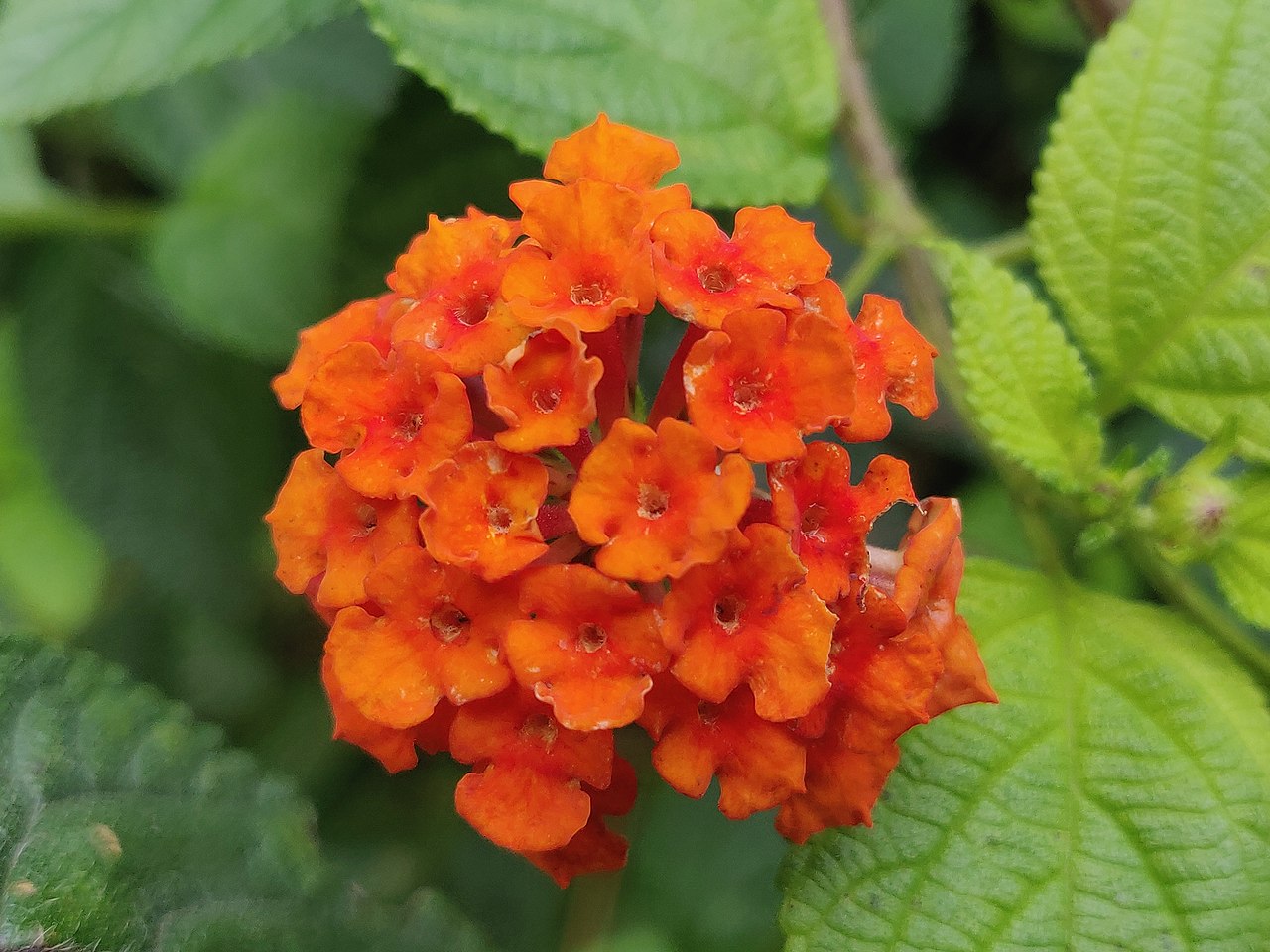
Lantana
Lantana camara
Family: Verbenaceae · Also called Shrub Verbena, Wild Sage, Red Sage, Lantana moritziana f. parvifolia, Lantana glandulosissima f. albiflora, Lantana glandulosissima f. flava
Earthy & Warm · Summer–Autumn bloomer
Lantana is a color-changing marvel, each dome-shaped flower cluster contains individual florets at different stages, creating a multi-hued effect where the outer (older) flowers are one color and the inner (younger) flowers another. A single cluster might show pink fading to yellow, or orange shifting to red. It blooms non-stop in warm climates.
rigor, resilience, severity
In the Victorian language of flowers, lantana means “Rigor and severity”. Lantana is one of the world's most invasive plants, listed in the 100 Worst Invasive Species globally. Introduced as an ornamental, it's taken over vast areas of India, Australia, and East Africa. Despite its invasive reputation, it's beloved by butterfly gardeners and is one of the top butterfly-attracting plants in cultivation.
Did You Know?
Lantana flowers change color as they age to signal pollinators: young, nectar-rich flowers are one shade, while pollinated flowers shift to a different color telling butterflies not to waste time on them. The unripe berries are toxic to livestock and children, but ripe berries are eaten by birds, who spread it everywhere.
Roadsides, disturbed land, and forest edges in tropical and subtropical regions
Lantana is native to Tropical Americas. It naturally grows in roadsides, disturbed land, and forest edges in tropical and subtropical regions.
Scent Profile
“A pungent, love-it-or-hate-it aroma, crush a leaf and you'll find sharp, sage-like, citrusy notes that some find pleasantly herbal and others find disagreeable. The flowers are sweeter, attracting butterflies.”
Quick Reference
- Scientific NameLantana camara
- FamilyVerbenaceae
- Native ToTropical Americas
- Bloom SeasonSummer–Autumn
- LifespanPerennial
Cultural Significance
Lantana is one of the world's most invasive plants, listed in the 100 Worst Invasive Species globally. Introduced as an ornamental, it's taken over vast areas of India, Australia, and East Africa. Despite its invasive reputation, it's beloved by butterfly gardeners and is one of the top butterfly-attracting plants in cultivation.