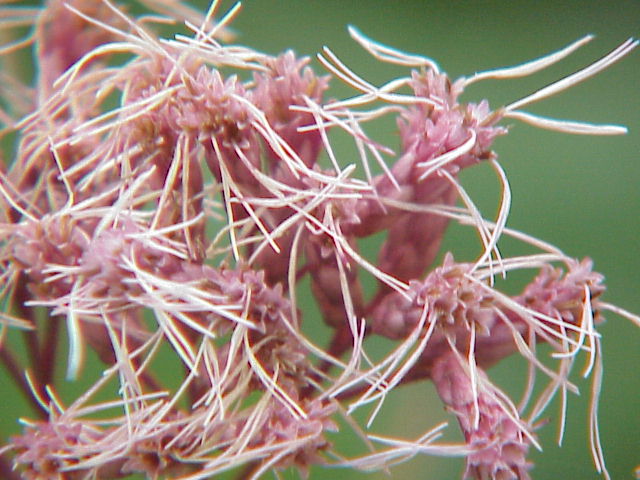
Joe Pye Weed
Eutrochium purpureum
Family: Asteraceae · Also called Trumpetweed, Sweet Joe Pye, Gravel Root, Cunigunda purpurea, Eupatoriadelphus purpureus, Eupatorium purpureum
Earthy & Warm · Summer–Autumn bloomer
Joe Pye weed is native plant gardening's gentle giant, soaring 5-7 feet tall with massive domed clusters of dusty-mauve flowers that become the social hub of the late-summer garden, thronged with monarchs, swallowtails, and bees. Its purple-tinged stems and whorled leaves provide architectural presence even before flowering.
healing, respect, admiration
In the Victorian language of flowers, joe pye weed means “Respect and admiration”. Named for a possibly legendary Native American healer named Joe Pye who supposedly used the plant to cure typhus fever in colonial New England. Whether Joe Pye was real is debated, but the plant's medicinal use by multiple Native American tribes is well-documented. It's experiencing a renaissance in naturalistic garden design.
Did You Know?
The stems contain coumarin (the same compound that gives freshly mown hay its sweet smell), which is why crushed stems smell like vanilla. Joe Pye weed is one of the top 5 plants for supporting monarch butterfly populations during their autumn migration, a single plant can host dozens of monarchs simultaneously refueling for their journey south.
Moist meadows, stream banks, and open woodlands in rich soil
Joe Pye Weed is native to Eastern North America. It naturally grows in moist meadows, stream banks, and open woodlands in rich soil.
Scent Profile
“A warm, vanilla-like sweetness, crush the stem and you'll find a distinctive vanilla scent (from coumarin). The flower heads attract clouds of butterflies with their sweet nectar.”
Quick Reference
- Scientific NameEutrochium purpureum
- FamilyAsteraceae
- Native ToEastern North America
- Bloom SeasonSummer–Autumn
- LifespanPerennial
Cultural Significance
Named for a possibly legendary Native American healer named Joe Pye who supposedly used the plant to cure typhus fever in colonial New England. Whether Joe Pye was real is debated, but the plant's medicinal use by multiple Native American tribes is well-documented. It's experiencing a renaissance in naturalistic garden design.