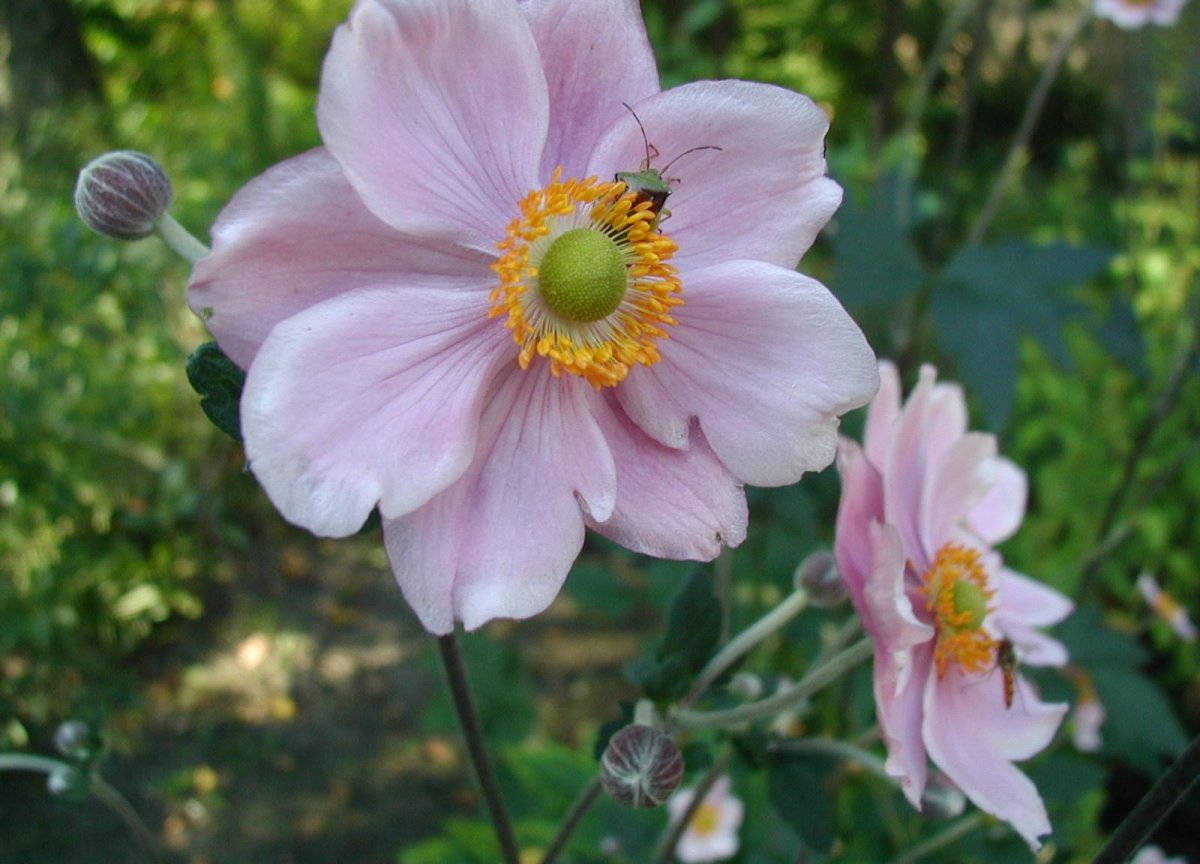
Japanese Anemone
Anemone hupehensis
Family: Ranunculaceae · Also called Windflower, Autumn Anemone, Shūmeigiku, Anemone robustostylosa, Anemone vitifolia var. matsudae, Eriocapitella vitifolia var. matsudae
Green & Fresh · Autumn bloomer
Japanese anemones are autumn's most elegant flowers, silvery-pink or white saucer-shaped blooms float on wiry, branching stems above a carpet of vine-like leaves. They bring an almost ethereal lightness to the late-season garden, dancing in every breeze like a corps de ballet performing above the fading border.
anticipation, protection against evil, sincerity
In the Victorian language of flowers, japanese anemone means “Anticipation and sincerity”. Despite the common name, Japanese anemones actually originate from China, they were naturalized in Japan so long ago that European plant hunters assumed they were native. The Chinese have cultivated them since at least 500 CE. In Japan, they're called 'shūmeigiku' (autumn bright chrysanthemum) and featured in ukiyo-e prints.
Did You Know?
Japanese anemones spread by underground runners and, once established, can be nearly impossible to remove, every tiny piece of root left in the soil produces a new plant. They were introduced to European gardens in 1844 by plant hunter Robert Fortune, who found them growing on graves near Shanghai.
Woodland edges, shaded banks, and moist ground in temperate climates
Japanese Anemone is native to China (naturalized in Japan). It naturally grows in woodland edges, shaded banks, and moist ground in temperate climates.
Scent Profile
“Essentially unscented, Japanese anemones are flowers of pure visual grace. Their appeal is the way they sway on impossibly thin stems in autumn breezes, not any fragrance.”
Quick Reference
- Scientific NameAnemone hupehensis
- FamilyRanunculaceae
- Native ToChina (naturalized in Japan)
- Bloom SeasonAutumn
- LifespanPerennial
Cultural Significance
Despite the common name, Japanese anemones actually originate from China, they were naturalized in Japan so long ago that European plant hunters assumed they were native. The Chinese have cultivated them since at least 500 CE. In Japan, they're called 'shūmeigiku' (autumn bright chrysanthemum) and featured in ukiyo-e prints.